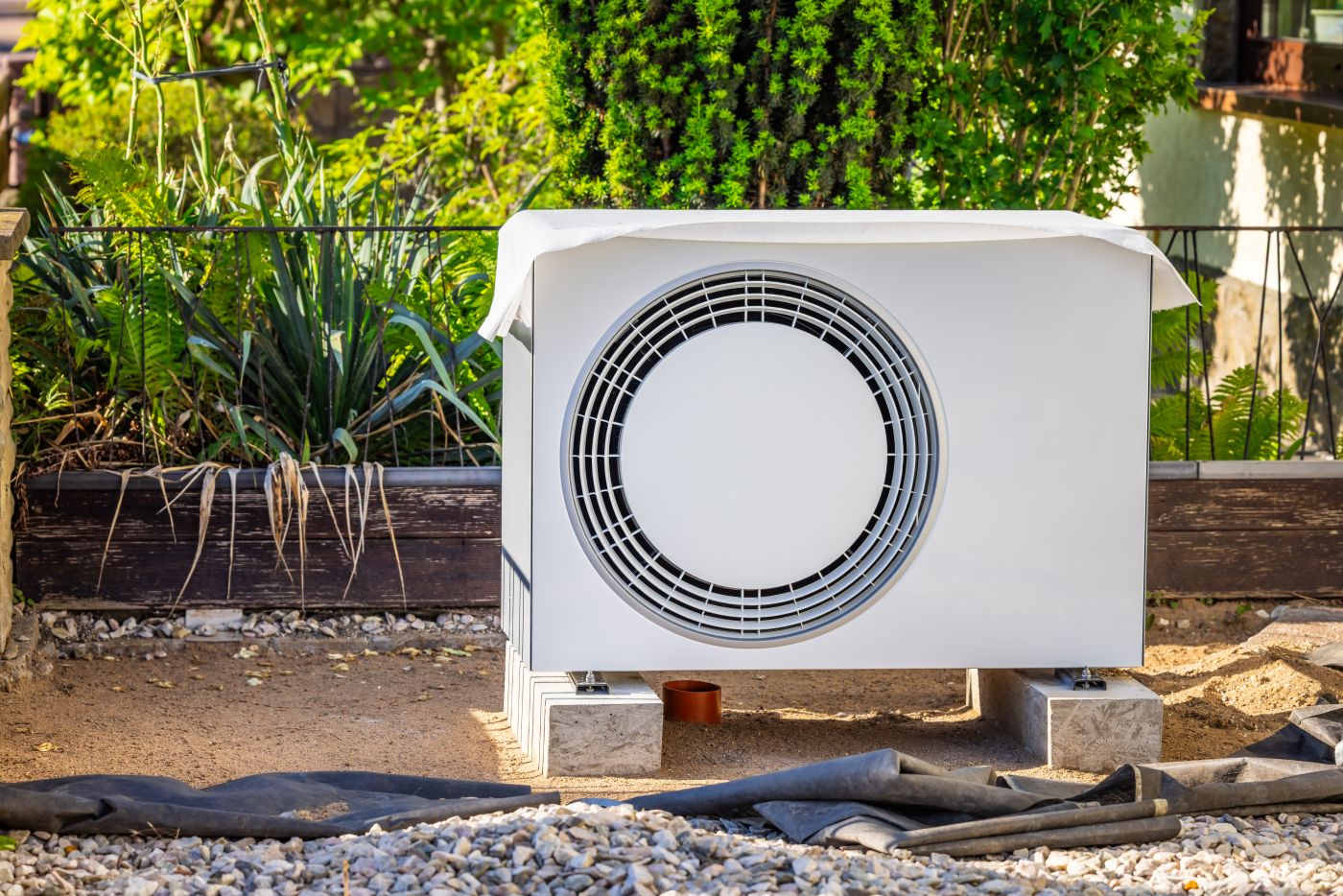
Choosing between a heat pump and central AC in Alberta depends on whether you need summer cooling alone or want a system that can also contribute to heating your home. Both options provide whole-home cooling, but their installation requirements, operating costs, and compatibility with your existing furnace can make one more practical than the other. All Around Heating & Cooling helps homeowners in Westlock and surrounding communities compare these systems based on their existing equipment and heating and cooling requirements.
The Main Difference Is What Happens Outside Cooling Season
Central air conditioning removes heat from your home during warm weather but cannot provide heating. Once cooling is no longer needed, your furnace or another heating system takes over completely.
An air-source heat pump performs the same cooling function but can reverse its operation to transfer heat from outside into your home. A properly sized ducted heat pump can replace central AC entirely while also providing heating during suitable outdoor conditions.
Depending on the equipment and system design, a heat pump can serve as the primary heating source or supplement an existing furnace. The distinction matters because choosing a heat pump introduces another way to heat your home rather than simply changing how it is cooled.
Heat Pump vs Central AC at a Glance
Both systems can provide whole-home cooling through existing ductwork, but their capabilities differ when heating requirements are considered. The comparison below highlights the factors that affect equipment selection.
Cooling: Central AC and ducted heat pumps can both provide whole-home cooling. Neither has an inherent cooling advantage simply because one also provides heating, as actual performance depends on equipment sizing, efficiency, and installation quality.
Heating Capability: Central AC provides no heating, while a heat pump can supply primary or supplemental heating. Whether a heat pump can meet the home's full heating demand depends on its capacity at low outdoor temperatures and the availability of supplemental heating.
Existing Furnace Compatibility: Central AC commonly works with a compatible forced-air furnace and indoor cooling coil. A heat pump can also be paired with a furnace, although additional equipment compatibility and control requirements must be considered.
Cold-Weather Role: Central AC generally remains inactive during the heating season, while a heat pump can continue operating when heating is required. Its contribution depends on outdoor temperatures, heating capacity, and the system's operating configuration.
Best Fit: Central AC generally suits homeowners who primarily want summer cooling and are satisfied with their existing heating system. A heat pump may be more appropriate when additional heating capability provides enough practical or financial benefit to justify the investment.
A heat pump may cost more to purchase and install than a comparable cooling-only system, but the difference is not fixed. Equipment specifications, installation requirements, and compatibility with existing components determine the actual cost comparison.
When Central AC Makes More Sense
Central AC is generally the more practical investment when the home's existing heating arrangement does not need to change. The decision depends on whether dedicated cooling can meet your needs without paying for additional heating capability or modifications to the existing HVAC system.
You Already Have a Reliable Heating System
If your furnace operates efficiently and meets your home's heating requirements, central AC may be the more economical addition. You can retain your current heating arrangement while installing equipment dedicated to summer cooling.
Homeowners with reliable natural gas furnaces may see limited operating-cost benefits from adding heat pump heating, particularly when electricity is relatively expensive compared with natural gas. A heat pump can still reduce furnace operation, but that reduction does not necessarily translate into lower total heating expenses.
The age and anticipated replacement timing of your furnace also matter. If replacement is already planned, evaluating heating and cooling equipment together can prevent purchasing components that may not be compatible with the future system or paying twice for related installation work.
Your Main Goal Is Summer Cooling
Central AC is often the more practical choice when cooling is your only immediate priority. It provides the required function without investing in additional heating capability that you may not use enough to justify its cost.
A conventional AC installation may also require fewer equipment and control changes when your existing furnace is compatible. Comparing systems with similar cooling capacities and efficiency ratings helps establish whether the additional cost of a heat pump offers meaningful value beyond cooling. Homeowners considering air conditioning installation in Westlock should also account for the condition of their current equipment before selecting a replacement or new system.
When a Heat Pump Makes More Sense
A heat pump becomes worth considering when its heating capability serves a clear purpose beyond providing summer cooling. That purpose may involve adding another heating option, reducing reliance on an existing furnace, or preparing for changes to the home's heating system.
You Want Heating and Cooling From the Same Outdoor System
A heat pump makes sense when you want one outdoor system capable of providing both heating and cooling. This can be particularly useful when installing whole-home cooling for the first time or replacing an aging air conditioner while considering future heating requirements.
Choosing a heat pump can also provide flexibility if you plan to change your heating arrangement later. However, equipment should be selected with those plans in mind because future compatibility cannot be assumed, and a system sized primarily for cooling may not satisfy the home's entire heating demand.
You Want to Reduce Furnace Use During Milder Weather
A heat pump can supply heating during spring, fall, and suitable winter conditions instead of relying entirely on your furnace. This reduces natural gas or propane consumption while increasing electricity use, allowing part of the home's heating demand to be met through a different energy source.
Whether this lowers operating costs depends on the heat pump's efficiency at different outdoor temperatures and the relative costs of electricity and furnace fuel. The relevant comparison is the cost of delivering the same amount of usable heat, accounting for electricity consumption, heat pump efficiency, fuel prices, and furnace efficiency.
For example, a heat pump that produces more heat per unit of electricity may still cost more to operate than a natural gas furnace when electricity prices are comparatively high. Homeowners should evaluate expected heating costs rather than assuming that a more energy-efficient system will automatically produce lower utility bills.
How Your Existing Furnace Changes the Decision
An existing forced-air furnace can influence both installation options because its blower and ductwork may be used to distribute cooled air throughout the home. The difference lies in whether the new equipment only needs to provide cooling or must also coordinate heating operation with the furnace.
Adding Central AC to an Existing Furnace
Central AC commonly uses an indoor cooling coil installed within the existing forced-air system. The furnace blower circulates cooled air through the home's ductwork, while the outdoor air conditioning unit releases the heat removed from indoors.
This arrangement allows the furnace to continue providing heat without changing its normal heating operation. However, the blower, ductwork, indoor coil, and outdoor equipment must be compatible, and older installations may require modifications to provide adequate cooling airflow.
If the existing equipment is suitable, adding central AC can involve fewer changes than introducing a second heating source. The actual installation scope depends on the furnace configuration, available electrical capacity, and whether the home already has cooling equipment.
Pairing a Heat Pump With a Furnace
A heat pump can operate alongside a gas furnace in a dual-fuel system, allowing the home to use different heating sources as conditions change. The heat pump provides cooling and handles heating when appropriate, while the furnace takes over when additional heating capacity is needed or when operating costs favour using gas.
Both systems typically distribute conditioned air through the same ductwork, but they require controls that coordinate their operation. In a conventional dual-fuel configuration, the heat pump and furnace alternate rather than heating simultaneously, preventing conflicting operation between the two systems.
Pairing a heat pump with an existing furnace does not necessarily mean retaining every component of the current cooling system. Replacing central AC with a heat pump generally requires a compatible outdoor unit, indoor refrigerant coil or air handler, refrigerant components, and controls, even when the furnace itself remains in place.
An existing furnace can therefore continue serving as the backup heating source without requiring immediate replacement. However, an older or incompatible furnace may require additional modifications or replacement, which can significantly change the economics of choosing a heat pump over conventional AC.
Alberta Weather and Seasonal Operating Patterns
Alberta's extended heating season creates opportunities for heat pumps to operate beyond the summer cooling period. In Westlock, the amount of useful heating a heat pump can provide depends on the equipment selected and how its performance changes as outdoor temperatures fall.
Air-source heat pumps generally become less efficient and may deliver less heating capacity as temperatures decrease. Cold-climate models are designed to maintain useful performance at lower temperatures, but their capabilities vary, and the heating output of a specific model must be evaluated against the home's requirements.
In a dual-fuel system, the transition between heat pump and furnace operation can be based on heating capacity, operating costs, or both. A heat pump may still be capable of heating the home at a particular outdoor temperature even when operating the gas furnace would cost less.
The temperature at which the furnace becomes more economical is therefore not necessarily the temperature at which the heat pump can no longer meet heating demand. Selecting appropriate changeover settings requires equipment performance data, the home's heating load, and current energy rates rather than relying on one standard outdoor temperature for every installation.
Installation Factors That Can Rule Out One Option
The condition and configuration of your existing HVAC equipment can determine whether central AC or a heat pump is practical. Some homes can accommodate either option with limited modifications, while others require substantial changes that affect the overall installation cost.
- Ductwork condition: Both ducted systems require sufficient airflow to distribute conditioned air throughout the home. Undersized or restrictive ductwork can affect either option, while some heat pump configurations may require greater airflow than the existing furnace system provides.
- Electrical capacity: Central AC and heat pumps require suitable electrical circuits and sufficient available capacity. Depending on the selected equipment and existing electrical service, an upgrade may be necessary before installation.
- Equipment compatibility: Central AC requires a compatible indoor cooling coil, blower, and outdoor unit. A heat pump paired with an existing furnace also requires suitable heating controls and compatible components, so not every furnace can support every heat pump configuration without modifications.
- Available outdoor space: Both systems require adequate clearance for airflow, maintenance, and equipment operation. Heat pumps used for winter heating also need appropriate placement to accommodate snow accumulation and water drainage during defrost cycles.
- System sizing: Both options must be selected according to the home's cooling requirements, while heat pump selection must also consider heating demand. Choosing equipment based only on square footage or the capacity of an existing air conditioner can result in poor performance, excessive cycling, or insufficient heating output.
Homes without existing forced-air ductwork may face additional installation costs regardless of which centrally ducted system is selected. If installing or modifying ductwork is impractical, neither option may be suitable in the proposed configuration without reconsidering the system design.
These requirements should be evaluated before comparing equipment prices because the least expensive unit may not produce the lowest total installation cost. Electrical upgrades, ductwork modifications, and equipment compatibility can substantially affect which option makes financial sense.
Choosing Between a Heat Pump and Central AC in Westlock
For Westlock homeowners, the final decision should be based on the additional value of heat pump heating rather than cooling performance alone. A conventional central AC system may meet the home's requirements at a lower initial cost, while a heat pump can justify a higher investment when its heating capability provides sufficient practical or operating-cost benefits.
The most useful comparison considers two complete installation proposals with equivalent cooling requirements. Homeowners should compare the additional installed cost of the heat pump against realistic annual heating-cost differences, anticipated equipment usage, and any modifications required to the existing furnace or ductwork.
If the heat pump is expected to produce operating savings, those savings should be considered over the homeowner's anticipated ownership period rather than assuming the higher initial investment will automatically pay for itself. Maintenance requirements, future furnace replacement plans, and the value of having another heating option can also influence the decision even when immediate financial savings are limited.
All Around Heating & Cooling helps homeowners in Westlock and surrounding communities evaluate their existing HVAC systems when considering central AC or heat pump installations. Assessing your furnace, cooling requirements, and installation constraints provides a more accurate understanding of which configuration suits your home and the costs involved.